Why do two scrap parcels of identical tonnage fetch different prices? Every line that shapes the price, from grade and impurities to weighing and freight, in one guide.
Why Scrap Metal Is Priced Like a Commodity
Scrap metal is not a manufactured product but a recyclable raw material. Its price therefore depends not on a producer's cost structure but on the primary metal market: scrap iron tracks hot-rolled steel and ore prices, while copper scrap follows the copper quotation on the London Metal Exchange. The first thing to look at in any scrap offer is which index and which date it references.
That dependency means scrap prices can move noticeably within weeks. When steelmakers' demand rises, scrap iron carries a premium; when construction slows, the same parcel fetches less. For long-term supply agreements, an index-linked formula rather than a fixed price therefore builds a structure that is more sustainable for both sides.
Commodity logic has one further consequence: in scrap you sell a specification, not a brand. The buyer pays for the grade and content of what is delivered, not for a company name. Trust in this trade is built on measurable criteria and documents, not on marketing language.
Grade: The First and Largest Driver
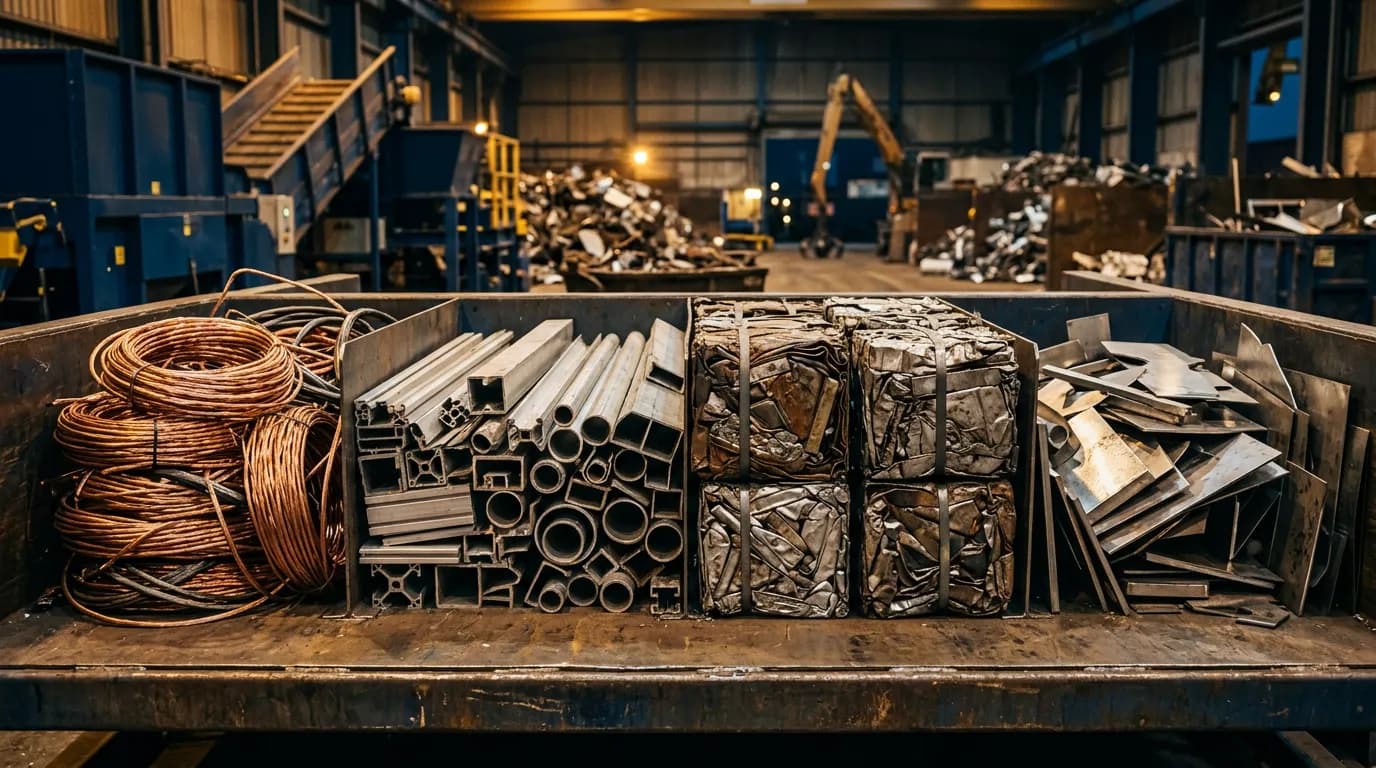
The scrap world splits broadly in two: ferrous and non-ferrous metals. Scrap iron, cold-rolled sheet, sections and rebar make up the ferrous group, by far the largest part of the market by tonnage. Copper, aluminium, brass, zinc and lead form the non-ferrous group, with prices per tonne many times higher.
Stainless steel occupies a particular place between the two. Because its nickel and chromium content drives the price directly, there is a substantial gap between 304 and 316 grades. That difference is hard to judge by eye, and leaving it unresolved by analysis creates risk for buyer and seller alike.
Mixed lots are a subject of their own. A pile that has not been segregated by grade is priced not on the most valuable metal inside it but on the average that remains once sorting costs are deducted. Simple segregation carried out at the yard very often improves the price achieved per tonne substantially.
Impurities and Yield: What Are You Actually Selling?
In scrap, the buyer is not purchasing the tonnage on the weighbridge but the metal that tonnage will yield. Impurity level therefore sits at the centre of the price. For copper cable scrap, the price paid reflects not the gross weight of the cable but the conductor content inside it; the higher the share of plastic insulation, the lower the price per tonne.
The same logic applies in the ferrous group. Paint and coating residue on sheet scrap, oil and bakelite in motor scrap, soil and concrete in bulk scrap all reduce yield at the furnace. Buyers reflect that loss in the price either as a discount or by setting an acceptable upper limit.
Moisture is the line most often overlooked, and it affects the weight directly. A parcel left out in the rain may weigh more at the loading port and less on arrival. Setting a moisture tolerance in the contract keeps that difference from turning into a dispute.
Degree of Preparation and Packing
The physical state of the scrap determines how easily the buyer can use it, and that feeds straight into the price. Cut, sized and pressed scrap can go directly into the furnace and commands a higher price than an unprocessed mixed lot. Baling also improves transport efficiency: more tonnage fits into the same hold volume.
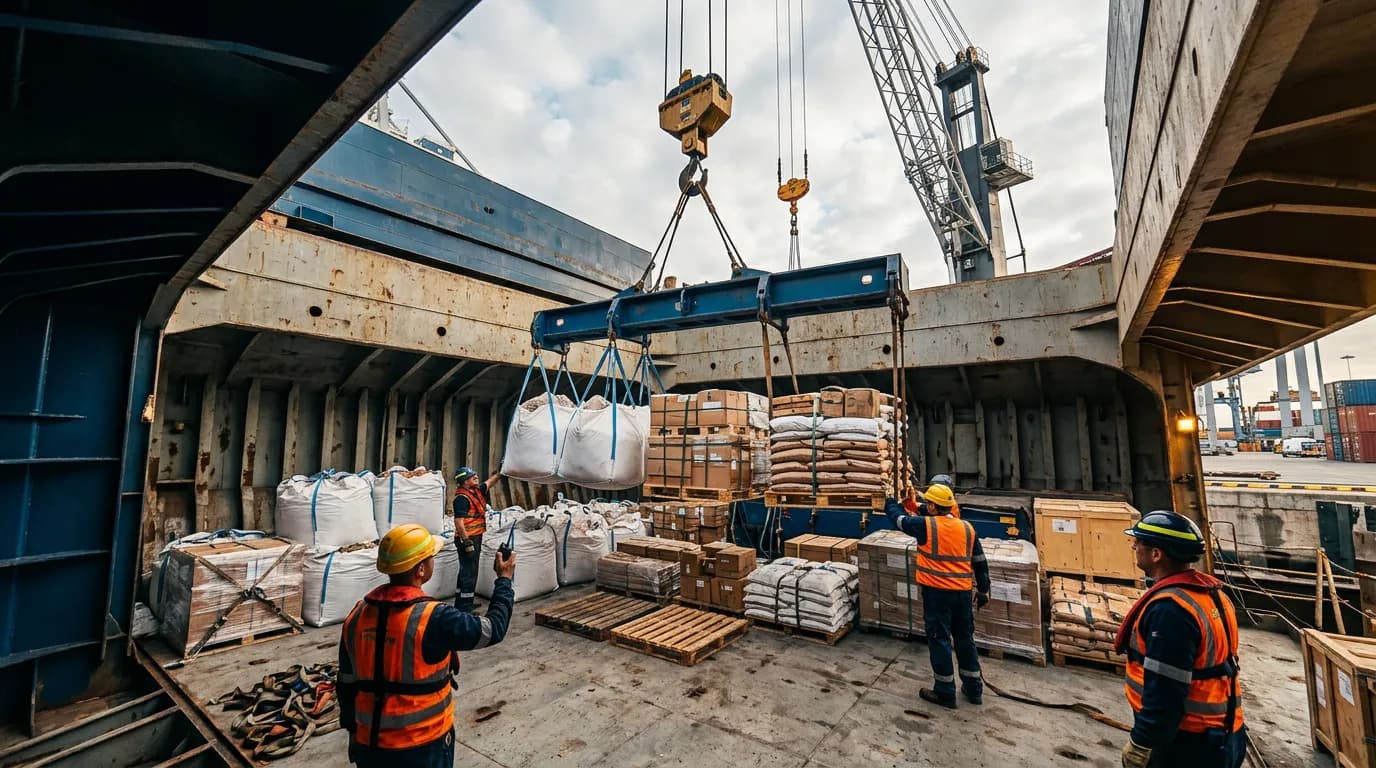
Fine material such as turnings and offcuts calls for a different approach. Shipped loose it is both prone to loss and awkward to load; using big-bags for these parcels improves weighing accuracy and handling speed alike.
Preparation is not always profitable. Cutting, pressing and sorting all carry labour and energy costs, and on small lots those costs can exceed the price uplift they earn. The right call comes from comparing the preparation cost against the expected price difference, per tonne.
Tonnage, Logistics and Delivery Point
Scale is the strongest lever on price in scrap. A bulk shipment that fills the hold gives the lowest transport cost per tonne, though it requires a minimum tonnage to be met. Small parcels moved in containers carry a higher unit cost but gain flexibility and security — for valuable non-ferrous metals, containers are frequently the right choice.
The delivery point affects the price by exactly the transport cost. The gap between a parcel delivered at the yard and the same parcel delivered at the buyer's plant is the sum of inland haulage, port charges and freight. When comparing offers it is essential to establish which delivery term each price is based on — otherwise you are comparing apples with pears.
Port efficiency quietly feeds into the cost as well. Extra days at a port with slow loading rates return as demurrage on the invoice. Voyage planning has to weigh not only distance but the equipment available at the loading and discharge ports.
Putting the Specification in Writing
Almost every dispute in the scrap trade stems from a specification that was not written clearly enough. 'Clean scrap iron' can mean different things to buyer and seller. When the acceptable level of foreign material, maximum piece size and moisture tolerance are not written down, the argument starts only after the cargo reaches the discharge port — the most expensive possible moment.
A good contract uses numerical thresholds instead of vague adjectives: maximum percentage of foreign material, piece size range, packing form and the governing weighing method. Settle those four lines and most later disputes are closed before they can open.
The weighing basis matters particularly. Will the weighbridge record at the loading port govern, or the draft survey at discharge? Small differences arise between the two from moisture and handling, and the tolerance within which that difference is accepted must be written down from the start.
Sampling, Analysis and Radiation Screening
For non-ferrous and stainless grades, visual inspection is not enough. What grade a stainless lot really is, or what the conductor content of a copper cable amounts to, is settled only by laboratory analysis. Taking a representative sample before shipment and sharing the report between the parties largely removes the risk of cargo being rejected on arrival.
Radiation screening, meanwhile, is not optional but mandatory. Scrap shipments are screened for radiation before loading and the report is added to the document file. Skipping this step leaves cargo waiting at the port for days and generates serious additional cost.
Documents being consistent with one another matters as much as each being correct on its own. The tonnage on the weighing certificate has to match the packing list and the bill of lading. A small discrepancy between documents can start a chain that ends in delayed payment under a letter of credit.
A Real-World Example
Consider an industrial plant selling the mixed metal scrap generated during a modernisation. In the first approach the whole lot is sold loose as a single line, at an average ferrous price. Yet inside the pile there is a considerable quantity of stainless tube and copper cable.
In the second scenario the plant spends two days on simple segregation at the yard: stainless in one stack, cable in another, the remaining ferrous in a third. The copper cable is analysed and its conductor content documented. The same total tonnage is then sold under three separate specifications, at three separate prices.
The difference far exceeds the labour spent on sorting. The example shows that in scrap, value very often lies not in the material itself but in how that material is defined and presented.
Common Mistakes
The most frequent mistake is comparing offers based on different delivery terms. The gap between a price at the yard and a price at the port is exactly the transport cost per tonne; ignore it and the offer that looks cheaper can turn out to be the expensive one.
The second mistake is leaving the specification to a verbal understanding. 'Clean material' as agreed over the phone does not translate into a measurable criterion on arrival. The third is leaving documentation until after loading, when the record chain should begin the moment the parcel enters the yard.
Finally, chasing the highest one-off price is not a sustainable strategy. A supply relationship built on committed tonnage and consistent conformity to specification produces more value over time than a single premium ever does.
Shipping Scrap by Sea — and Choosing the Right Partner
Because of its density and irregular geometry, scrap demands a particular approach to stowage. A miscalculated stowage factor leaves the hold full by volume and empty by tonnage — meaning the freight paid goes to waste. A correct stowage plan is one of the most tangible interventions available for lowering the cost per tonne.
The Black Sea is the shortest and most economical corridor for scrap and metal flows between Türkiye and Russia. Working on regular sailing routes means you can programme a shipment weeks in advance without exposure to spot-market freight swings.
Istanbul-based Novi Engineering runs scrap metal sales and sea-freight scrap transport under one roof. Our regular routes out of Karasu, Ünye, Bartın and Marmara serve Rostov, Temryuk, Sochi and Kavkaz, and on request we combine sale and transport to quote a delivered price per tonne. Send us the grade and tonnage of the parcel you hold and we'll assess it the same day, along with specification, analysis and shipping options.