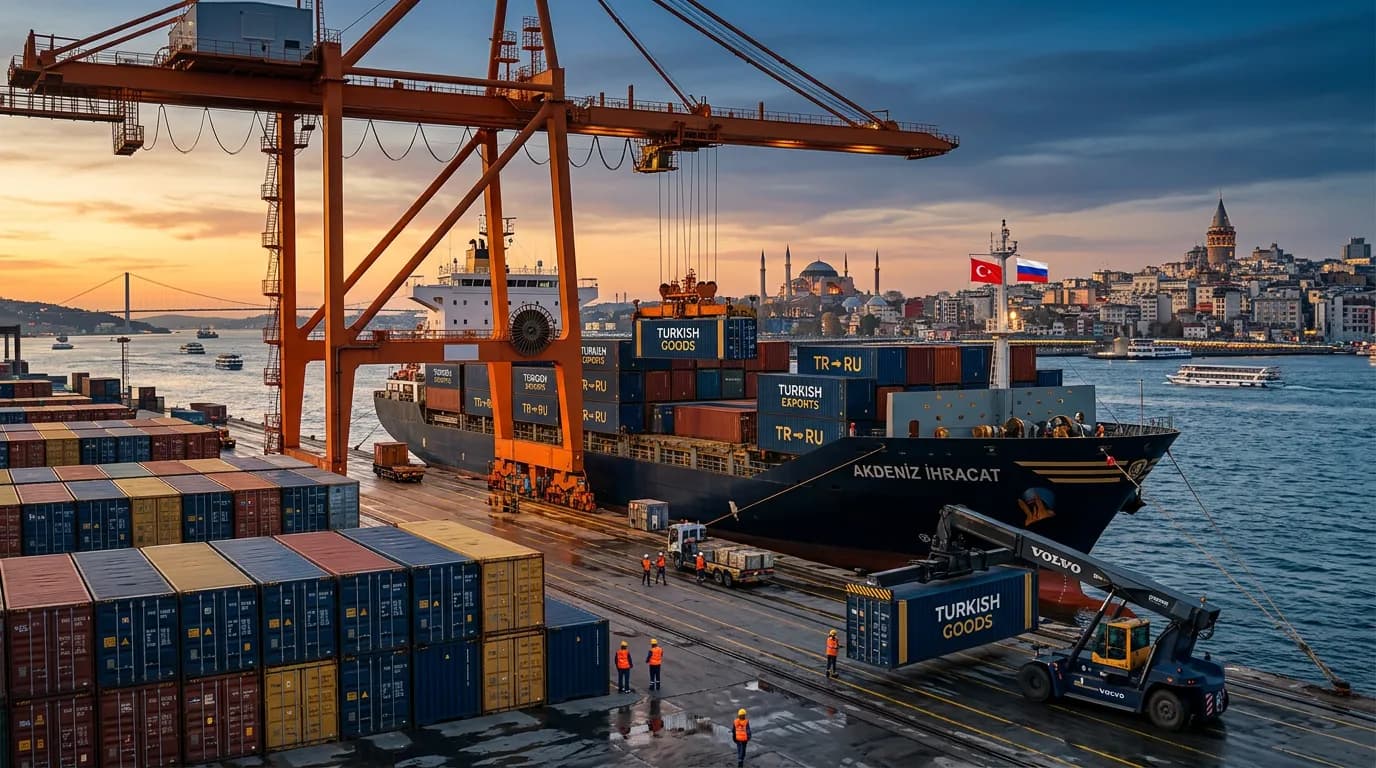
A practical guide for Turkish exporters entering the Russian market: process, documents, costs, common mistakes and logistics in one place.
Why the Russian Market Matters
Russia is one of Türkiye's largest trading partners, and the trade volume between the two countries grows steadily every year. A wide range of products, from construction materials to food, enjoys strong and consistent demand in the Russian market. For Turkish manufacturers looking to diversify beyond their traditional markets, Russia offers both scale and continuity. Demand is supported by ongoing construction activity and a very large consumer base.
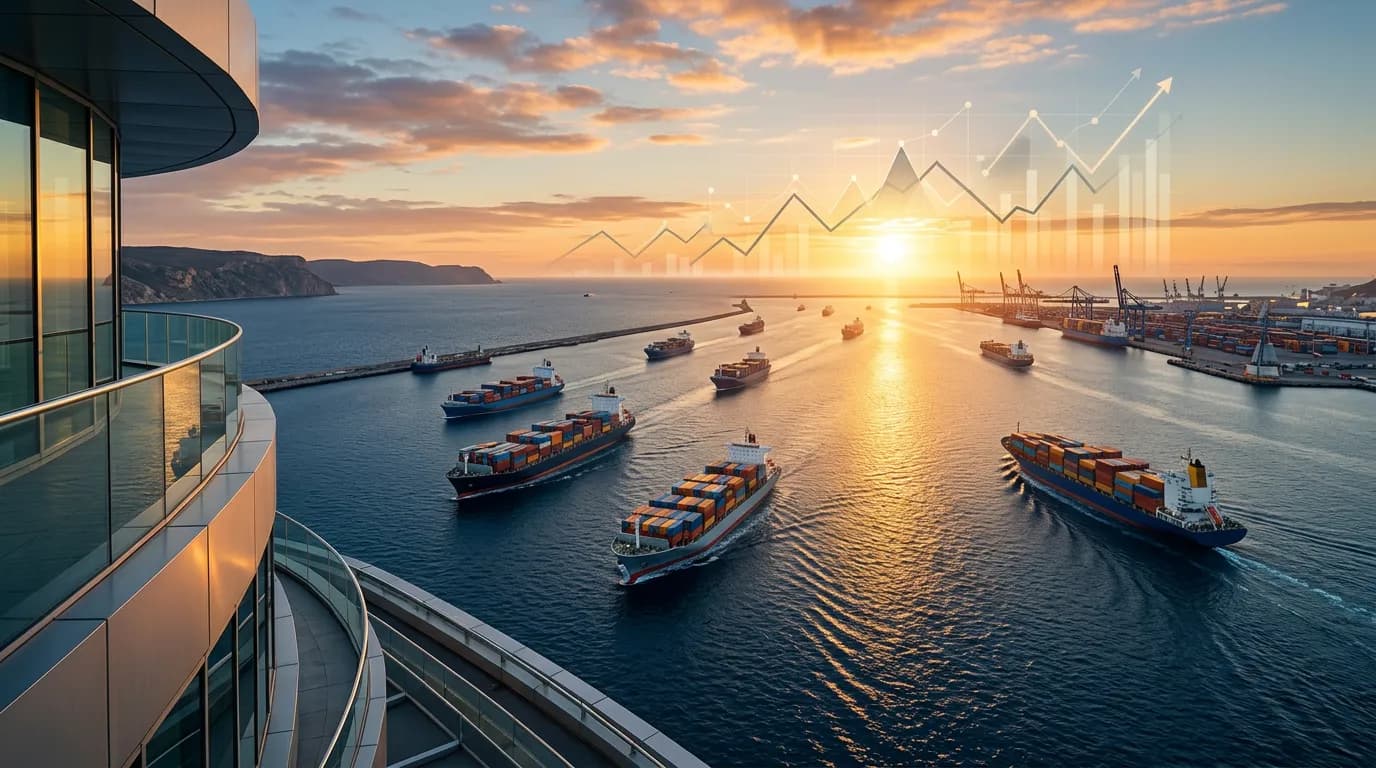
Geographic proximity gives Turkish exporters a clear edge over competitors in Europe and Asia. Direct maritime transport across the Black Sea shortens delivery times and significantly reduces logistics costs. While many global suppliers struggle with long and fragile supply chains, Turkish goods can reach Russian ports quickly and on a regular schedule. This closeness also makes it easier to visit buyers, audit operations and build lasting commercial relationships.
Product groups such as cement, gypsum, food products and cleaning supplies are particularly well positioned. These are goods that Russia imports continuously, and Turkish producers are known for dependable quality at competitive prices. Entering this market is therefore less about creating demand and more about organising the supply side correctly. That organisation, covering documents, customs and logistics, is exactly what this guide explains.
The Export Process Step by Step
The export process begins with finding the right buyer and clarifying the commercial terms. Once price, delivery terms and payment method are agreed, a proforma invoice is issued and the order is confirmed. At this stage it is essential to define the Incoterms rule precisely, because it determines who pays for freight, insurance and customs at every leg of the journey. Ambiguity on these points is one of the most common sources of later disputes.
The goods are then produced or sourced, quality checks are completed and the customs declaration is opened. After loading, the bill of lading and other shipping documents are sent to the buyer; payment is usually settled by letter of credit or bank transfer. Every step should be confirmed in writing, with dates and responsibilities clearly assigned. A short, well-structured contract protects both sides far better than verbal assurances.
Experienced exporters treat this flow as a repeatable cycle rather than a one-off project. Standard templates for invoices, packing lists and shipping instructions reduce errors and save time on every new order. Keeping a tidy file for each shipment, from the first offer to the proof of delivery, also makes bank and customs reviews painless. Discipline in process is what separates occasional sellers from sustainable exporters.
Documents You Will Need
The core documents for exporting to Russia are the commercial invoice, packing list, certificate of origin and bill of lading. Depending on the product group, conformity certificates, health certificates or EAC marking may also be required. Every document must match the others down to weights, quantities and invoice numbers. Russian customs authorities compare these details carefully, and inconsistencies trigger questions.
Small errors in documentation can cause serious delays and extra costs at customs. A missing stamp, a wrong consignee address or an outdated certificate can hold a shipment at the port for days. Working with an experienced foreign trade team therefore saves both time and budget. Having documents checked twice before departure is always far cheaper than correcting them after arrival.
Requirements differ noticeably between product groups. Food and cleaning products usually need health or hygiene documentation, while construction materials are assessed against the technical standards of the Eurasian Economic Union. The safest approach is to confirm with the buyer and their customs broker exactly which certificates are expected before production begins. This single habit prevents a large share of border problems.
A Practical Pre-Shipment Checklist
Before any cargo leaves the factory, make sure the contract, the proforma invoice and the payment instrument are all in place and consistent with each other. Verify the buyer's full legal details, delivery address and contact persons. Check that the agreed Incoterms rule is written on every commercial document. These simple confirmations remove most of the ambiguity from the operation.
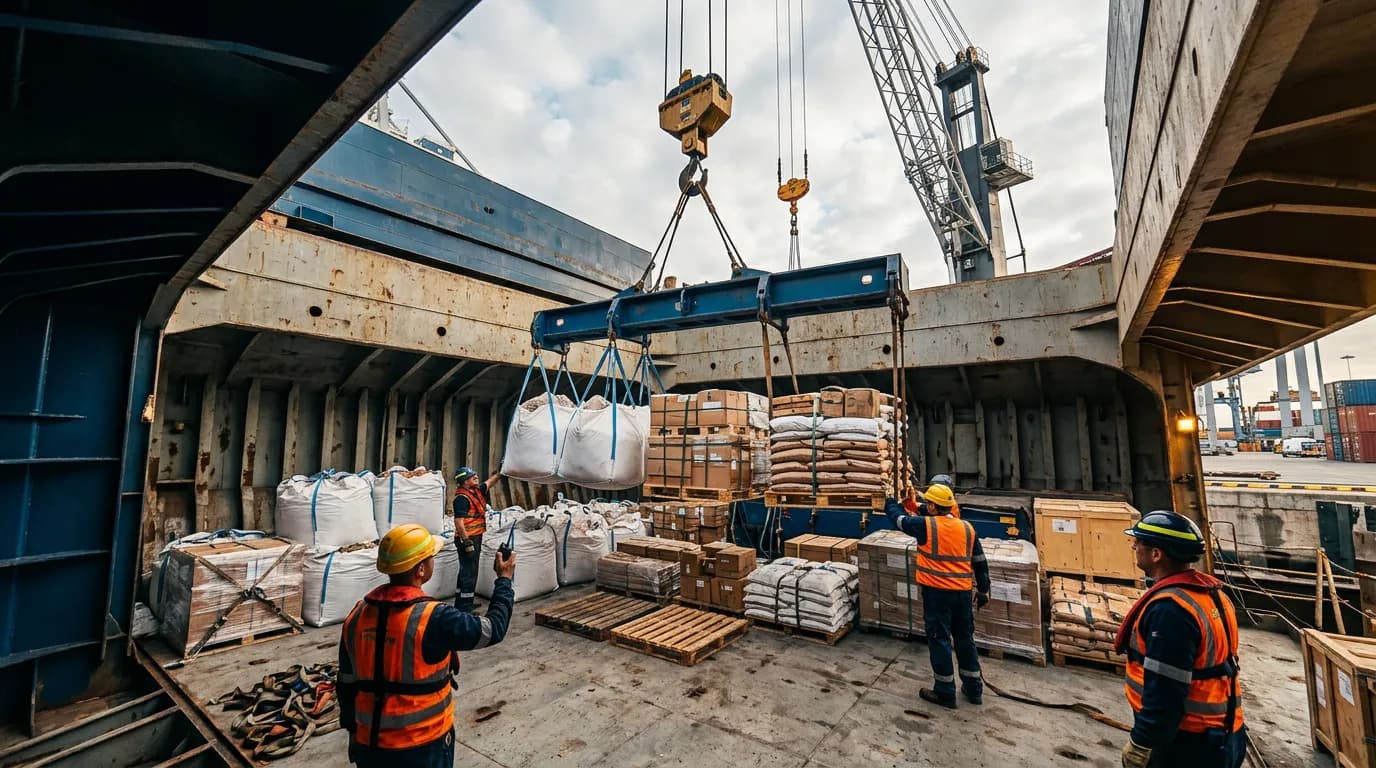
Next, review the physical side of the shipment. Packaging must be suitable for sea transport, pallets must be stable and labelling should meet the destination market's language and content rules. For consumer goods bound for Russia, Russian-language labels are often required. A short inspection at the warehouse costs little and prevents expensive rework at the port.
Finally, align the logistics chain. Confirm the vessel booking, the loading date and the cut-off times with your forwarder, and send the full document set to the customs brokers on both sides in advance. When this list is worked through before every shipment, surprises turn into routine. Checklists feel bureaucratic at first, but they are the cheapest insurance in foreign trade.
Common Mistakes and How to Avoid Them
The most frequent mistake is inconsistent documentation: an invoice weight that differs from the packing list, or a product description that does not match the certificate. Such mismatches are easy to fix at the office and very expensive to fix at the border. The cure is a final cross-check of all documents by one responsible person before dispatch.
The second classic error is underestimating certification. Some exporters start production before confirming whether their product needs EAC marking, conformity assessment or health certificates. If the requirement surfaces late, the shipment waits while the paperwork catches up. Confirming regulatory requirements at the offer stage, not the shipping stage, avoids this trap entirely.
The third risk area is payment security. Shipping on open account to a new and unverified buyer exposes the exporter to serious losses. The first transactions should be anchored by a letter of credit, a meaningful advance payment or trade insurance. Trust is built over time; in the beginning, solid structure takes the place of trust.
Cost Factors to Plan For
The sales price is only the starting point of an export calculation. Inland transport to the port, port handling, sea freight, insurance and document or certification fees all add to the total cost. Each of these items should be confirmed in writing before a price is quoted to the buyer. An offer based on guesses is an offer that erodes margin.
Depending on the agreed Incoterms rule, destination-side costs may also fall on the exporter. These can include import duties, taxes, terminal charges and storage at the arrival port. Clarifying who pays what, and writing it into the contract, prevents painful surprises after the vessel sails. Experienced traders treat cost allocation as part of the negotiation, not an afterthought.
There are also hidden cost drivers that catch newcomers. Late documents can generate storage charges, customs queries can extend time at the port, and currency movements between the contract and payment dates can shift the result. Building a sensible buffer into the calculation and working with a logistics partner who quotes all-inclusive rates keeps the economics predictable.
Logistics and the Black Sea Advantage
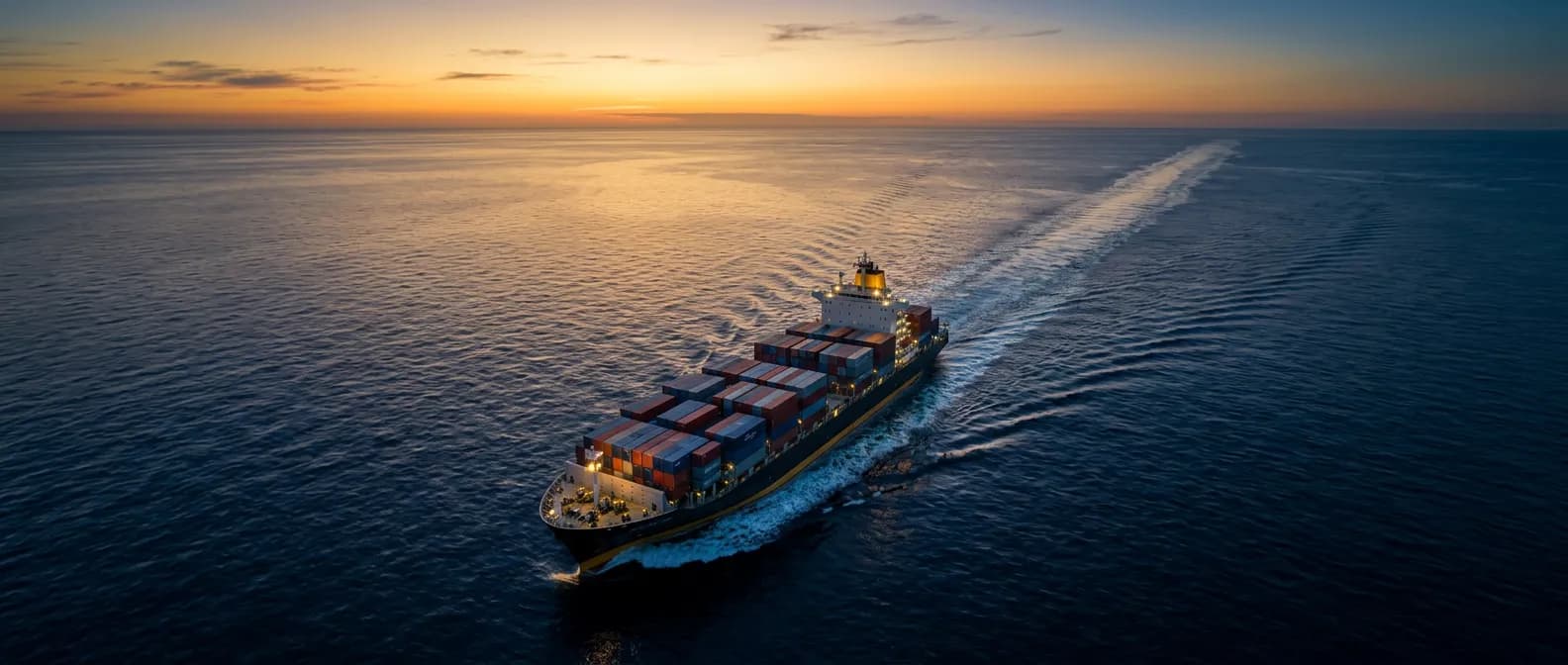
Direct Black Sea lines such as Karasu–Rostov and Ünye–Temruk create a fast and economical bridge between Türkiye and Russia. Sea freight is far more efficient than road transport, especially for heavy cargo like cement and gypsum. A single voyage can move what would otherwise require a long convoy of trucks. For regular export volumes, the sea route is the natural backbone.
The route network covers Türkiye's different production regions. Bartın–Sochi serves the western Black Sea coast, while the Marmara–Temruk and Marmara–Kavkaz lines connect the country's largest industrial zone directly to Russian ports. This variety lets exporters choose the departure port closest to their factory. Shorter inland legs mean lower pre-carriage costs and less handling risk.
Founded in Istanbul in 2023, Novi Mühendislik manages export operations and Black Sea ship voyages under one roof, offering customers door-to-door solutions. Combining trade expertise with own vessel operations removes the coordination gaps created by fragmented logistics. Choosing the right logistics partner is one of the most critical steps for a successful entry into the Russian market.
A Real-World Scenario
Picture a Marmara-based producer of bagged construction materials receiving its first serious enquiry from a Russian buyer. The company confirms the commercial terms, issues a proforma invoice and secures the payment through its bank before reserving capacity. Production is scheduled only after the financial side is settled. This sequencing protects cash flow from day one.
While the goods are produced and palletised, the export file is prepared in parallel: invoice, packing list, certificate of origin and the conformity documents the buyer requested. The cargo is trucked the short distance to the port and loaded onto a vessel bound for Rostov. Because the documents were ready before the ship, nothing waits on paperwork.
On the Russian side, the buyer's customs broker received the document set in advance, so clearance proceeds without complications. The cargo is delivered, the buyer is satisfied and a repeat order follows shortly after. The second shipment runs faster than the first, because the templates and contacts are already in place. The lesson is simple: smooth exports are prepared, not improvised.
Expert Tips for New Exporters
Start narrow and deep rather than wide and shallow. One product group and one route, mastered properly, teach more than five markets attempted at once. Once the cycle of order, shipment and payment runs smoothly, scaling becomes a matter of repetition. Early focus builds the operational muscle that growth later relies on.
Invest in relationships as much as in goods. A reliable customs broker on each side of the Black Sea, a responsive forwarder and an honest bank contact are worth more than any discount. Communicate with your buyer proactively, especially when something deviates from the plan. Problems announced early are solved together; problems discovered late get billed to someone.
Finally, treat regulation as a moving target. Certification rules, labelling requirements and customs practice change, and yesterday's file is not automatically valid tomorrow. Follow official updates or work with a partner who tracks them professionally. Staying current is far cheaper than re-learning the rules at the border.
Outlook and Your Next Step
The fundamentals of Türkiye–Russia trade remain strong: complementary economies, short distances and established demand for Turkish goods. The Black Sea corridor will continue to carry the bulk of this trade, and exporters who organise themselves well will keep capturing the opportunity. This market rewards preparation and consistency more than anything else.
For most companies, the first few shipments are the hardest part of the journey. Documents, certificates and logistics all feel new at the same time. With an experienced partner, the learning curve flattens quickly and the process becomes routine. The goal is not just one successful delivery, but a repeatable export operation.
Novi Mühendislik supports exporters along this entire path, from commercial setup and documentation to its own scheduled vessel voyages on the Black Sea. If you are planning your first shipment to Russia or want to make your current flow more efficient, a conversation with our team is a practical place to start. The Russian market is close; with the right preparation, it is also within reach.