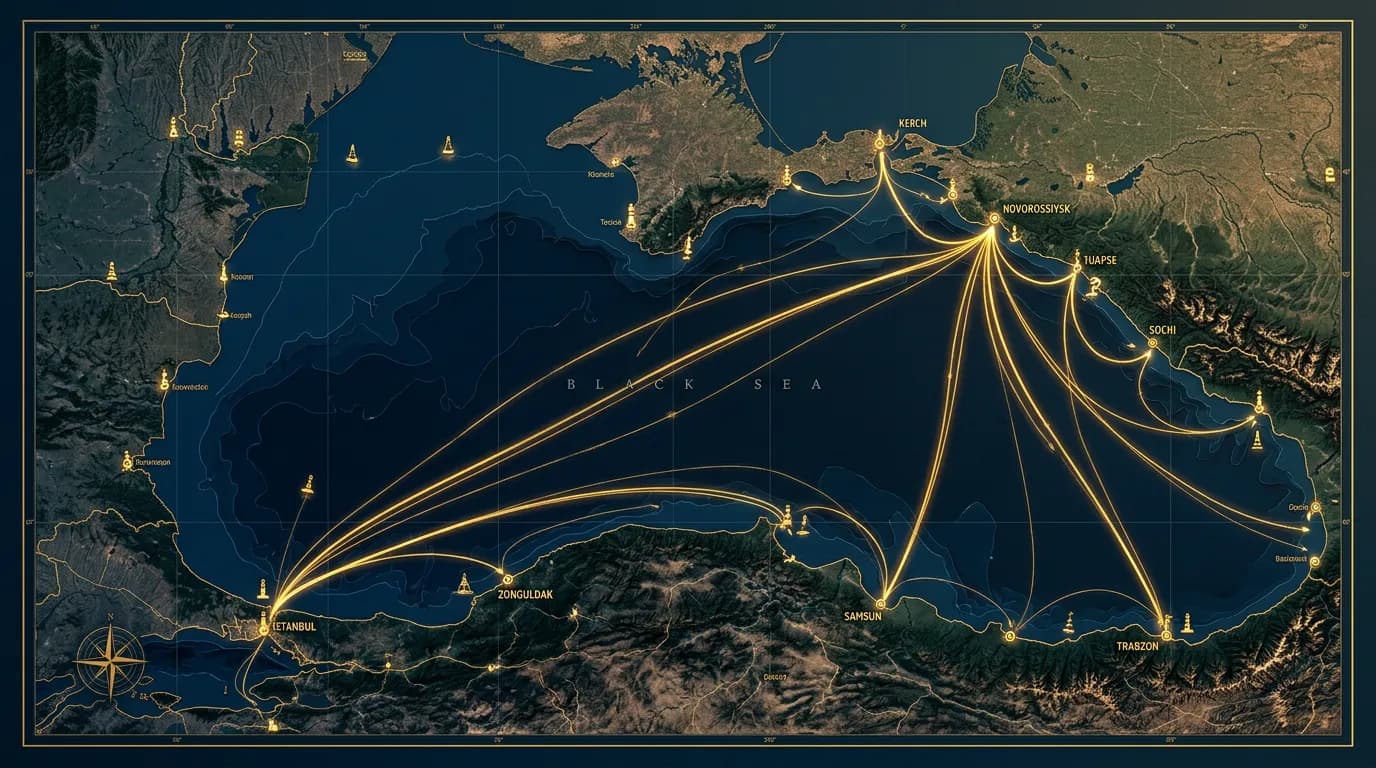
The main Black Sea routes connecting Türkiye and Russia: route selection, transit times, costs and the advantages of sea freight.
The Black Sea: A Main Artery of Trade
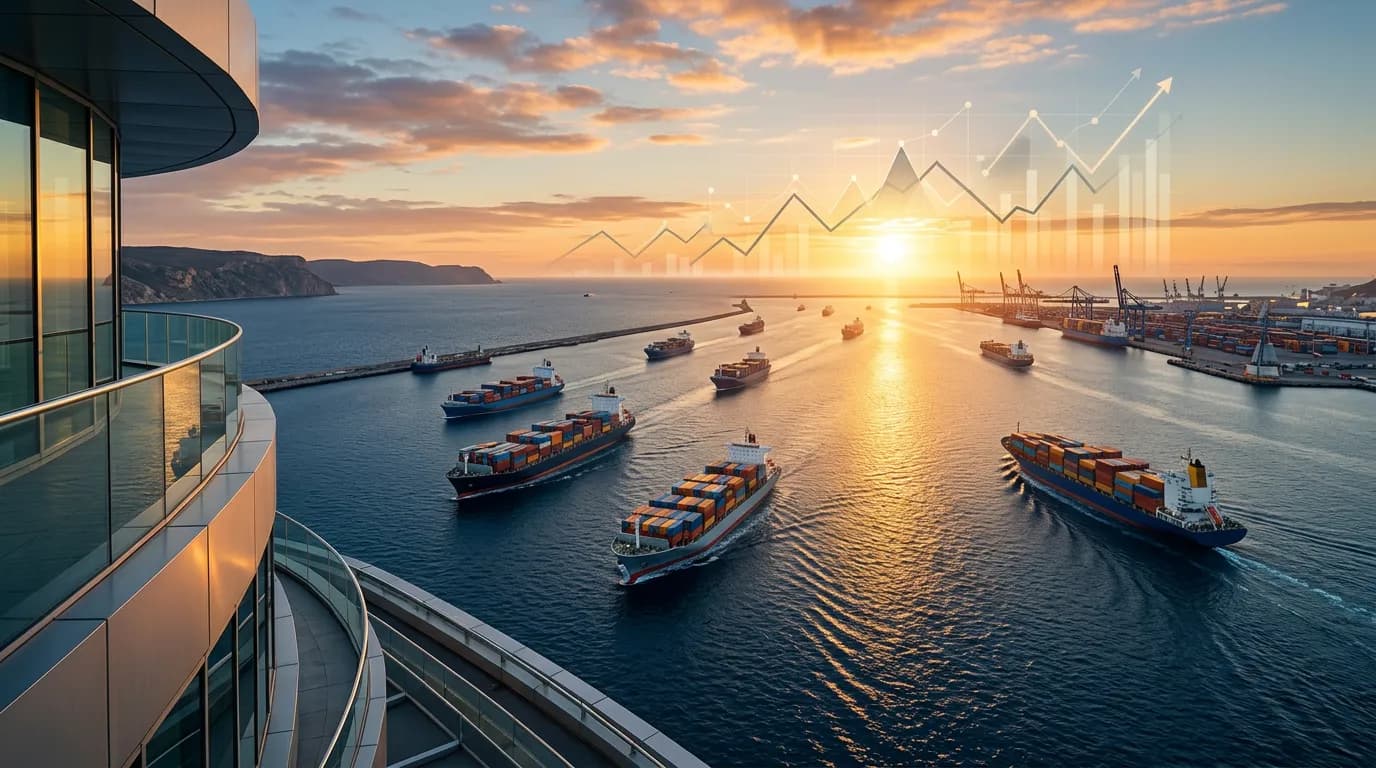
The Black Sea is the most natural and economical transport corridor for trade between Türkiye and Russia. Long coastlines and well-developed port infrastructure on both sides make regular ship voyages possible. For centuries this basin has carried grain, timber and building materials between the two shores. Today it remains the backbone of bilateral cargo traffic.
Considering the congestion at land border crossings and third-country transit permits, direct sea lines offer exporters a predictable alternative. A vessel departing from a Turkish port reaches a Russian port without depending on any third country's roads or paperwork. This independence is a strategic advantage in periods of shifting transit rules. Knowing these routes well is the first step of sound logistics planning.
The route network has matured into a set of complementary lines, each serving a different production region of Türkiye and a different destination region in Russia. Understanding which line suits which cargo is what turns a map into a logistics strategy. The sections below walk through the main routes one by one.
Karasu–Rostov and Ünye–Temruk Lines
The Port of Karasu stands out for its proximity to Istanbul and the Marmara industrial zone, while Rostov is a key gateway to inland Russia via the Don River. The Karasu–Rostov line is a fast exit point for goods produced around the Marmara region. Short pre-carriage distances keep trucking costs low and reduce handling before the sea leg.
The Ünye–Temruk line serves producers in the eastern Black Sea and provides direct access to the Krasnodar region through the Port of Temruk. This line is heavily used for cement, gypsum and general cargo shipments. For factories along the eastern Turkish coast, it removes the need to truck goods across the country to a western port.
Both lines share the same practical logic: match the departure port to the production region and the arrival port to the final market. Rostov suits cargo destined for inland Russia, while Temruk works well for the southern regions. Choosing along this logic shortens not only the sea leg but the total door-to-door time.
Bartın–Sochi and the Marmara Lines
The Bartın–Sochi route is a compact line connecting the western Black Sea with Russia's southern coast. Construction and tourism investments around Sochi generate steady cargo demand on this route. Building materials, interior products and supplies for tourism projects move regularly along this corridor.
The Marmara–Temruk and Marmara–Kavkaz lines connect Türkiye's largest manufacturing hub to Russian ports. Because the Marmara region produces a very large share of Türkiye's exportable goods, direct lines departing from this basin are natural workhorses. The Port of Kavkaz, located at the Kerch Strait, serves as a flexible transshipment and entry point.
Novi Mühendislik operates vessels on these five routes, giving its customers flexible voyage planning. Working on multiple parallel lines means cargo can be shifted between routes when schedules or volumes change. For cargo owners, this redundancy translates directly into reliability.
Transit Times and Cost
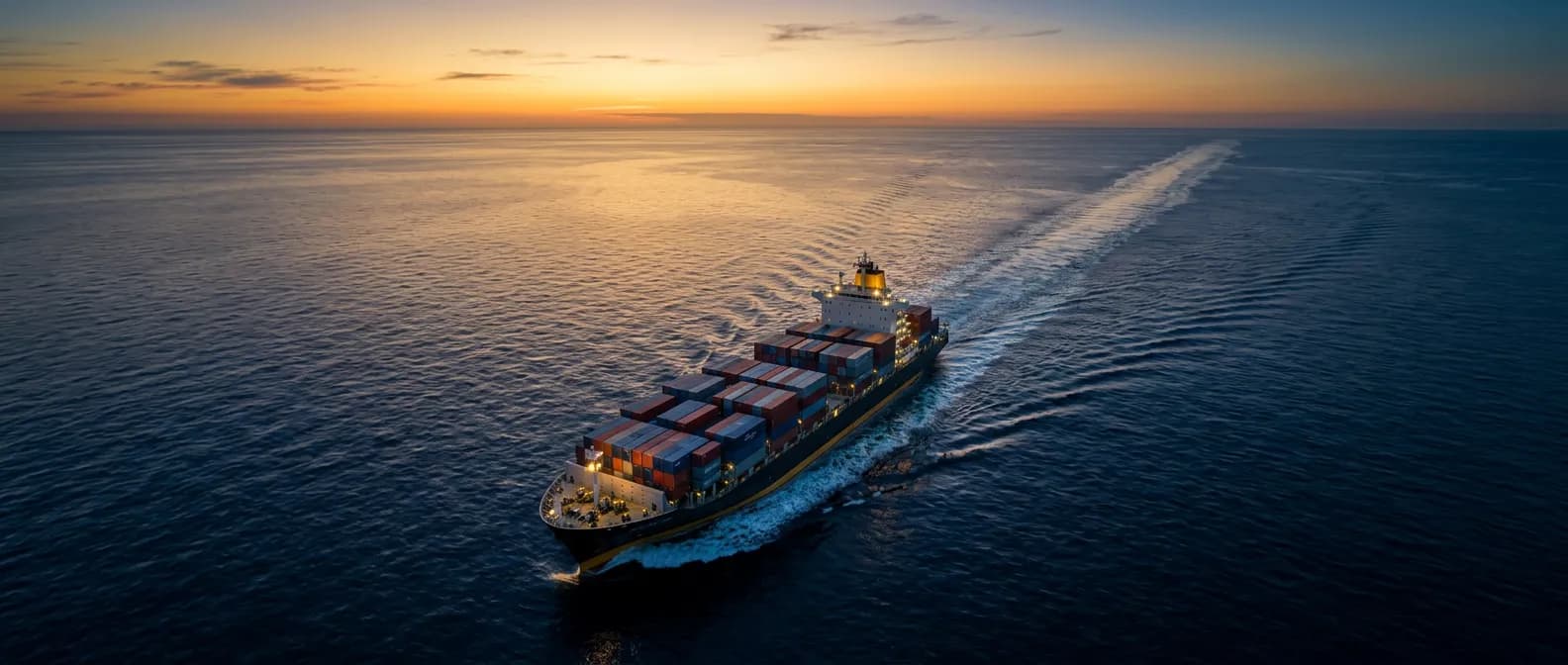
Transit times on Black Sea routes typically range from two to five days, depending on the port, weather conditions and loading schedule. Short distances keep freight costs per ton at very competitive levels. Compared with long ocean corridors, the Black Sea works more like an extended ferry network than deep-sea shipping.
Because a single voyage can carry thousands of tons, sea transport drives unit costs down. Regular sailing schedules let exporters plan production and shipment calendars with confidence. Predictability is often worth as much as the price itself, because it allows buyers to make commitments to their own customers.
The main variable on this sea is the weather, especially in the winter months. Experienced operators build realistic buffers into their schedules instead of promising impossible dates. A plan that can absorb a day of port delay is worth more than a perfect plan that collapses at the first storm.
Choosing the Right Route: A Practical Checklist
Route selection starts with geography: where is the cargo produced, and where must it finally arrive? The departure port should minimise the inland leg on the Turkish side, and the arrival port should minimise it on the Russian side. Answering these two questions naturally eliminates most of the options.
Next, assess the cargo profile: weight, volume, packaging and sensitivity to moisture and handling. Some ports and vessels are better suited to bagged construction materials, others to palletised consumer goods. Sailing frequency also matters; a slightly longer route with a more regular schedule often beats a shorter one with rare sailings.
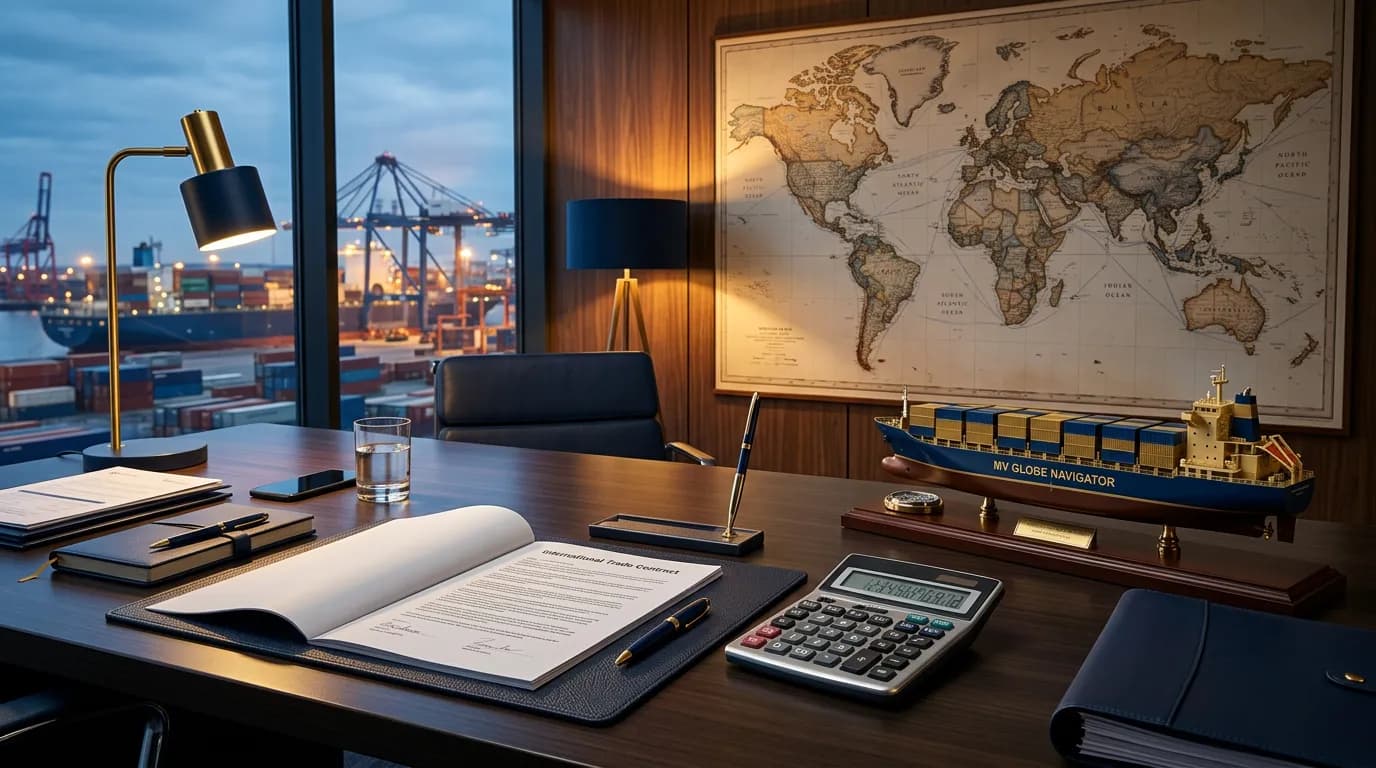
Finally, check the commercial framework: where will customs clearance take place, who is responsible for each leg under the agreed Incoterms rule, and which customs brokers will handle the file at both ends? When route, cargo and contract are aligned, the voyage itself becomes the easiest part of the operation.
Cargo Types and Vessel Suitability
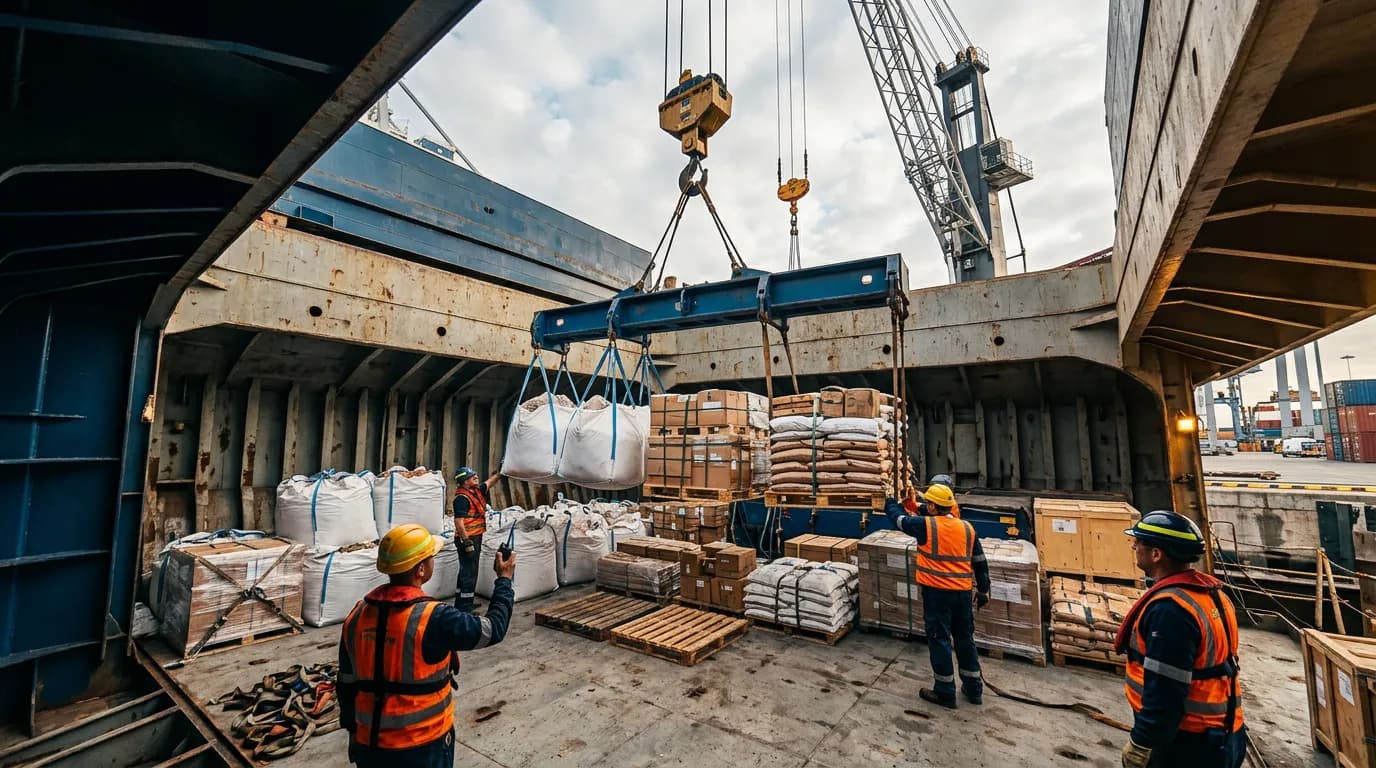
Bulk and bagged construction materials such as cement and gypsum are the classic cargo of the Black Sea lines. They move economically in large lots and tolerate the short voyage well when packaged correctly. The key technical requirement for these products is moisture protection.
Food and cleaning products demand a different discipline: clean holds, correct stowage and documentation that satisfies sanitary controls. General cargo, from machinery to household goods, requires careful lashing and stowage planning. Each cargo type has its own checklist, and an experienced operator applies it without being asked.
Vessel choice follows cargo choice. The coaster-type vessels common on these routes are extremely well suited to mixed lots and medium volumes. Discussing the cargo profile with the operator before booking ensures the right ship arrives, not just any ship.
Common Mistakes in Voyage Planning
The most common mistake is planning around the sea leg alone and ignoring the land legs. A short voyage gains little if the cargo waits at the port for days for trucks or documents. The figure that matters to a buyer is door-to-door time, not port-to-port time.
Another frequent error is booking too late. Capacity on regular lines is limited, and last-minute requests often have to wait for the next sailing. Early booking secures both space on the vessel and better planning on the port side.
Documentation mistakes complete the list: missing originals, mismatched weights or certificates that surface too late. A document check carried out as routine, before the vessel comes alongside the berth, prevents nearly all of these problems. However well the sea side is planned, an unprepared file gives back everything the voyage gained.
Sea or Road?
Road transport offers flexibility for small lots and urgent shipments, but waiting times at border gates and transit permit quotas create real uncertainty. Sea freight is both cheaper and more predictable for large volumes. For a producer shipping regularly, predictability turns into a real commercial advantage over time.
For heavy and bulky cargo, the cost per ton by sea is far below road transport. A single vessel replaces dozens of trucks, with fewer transfers and fewer points of failure. With the right route and vessel type, the Black Sea lines become the strongest link in Türkiye–Russia trade.
In practice, the two modes are partners rather than rivals. Trucks feed the ports and complete the final delivery, while the vessel carries the heavy middle of the journey. The smart question is not sea or road, but how to combine the two in one well-managed chain.
A Real-World Voyage Scenario
Consider a building materials producer near the Marmara region with a standing order from a buyer in southern Russia. The goods are trucked a short distance to the departure port, where the operator's team has already shared the loading plan and the document checklist. Loading proceeds on schedule because nothing is improvised.
The vessel sails on a regular line toward Temruk, and the shipping documents reach the Russian customs broker while the cargo is still at sea. Import clearance is prepared in advance, so the cargo moves from berth to truck without idle days. The buyer receives the goods within the planned window.
Spread this voyage across a season and the value of routine becomes obvious. The exporter plans production against a known schedule, the buyer plans sales against reliable arrivals, and both sides spend their energy on business instead of crisis management. This is exactly what a well-chosen route delivers.
Outlook and Working with Novi Mühendislik
Black Sea shipping will remain the backbone of Türkiye–Russia trade for the foreseeable future. Port investments on both coasts and steady cargo demand keep the route network alive and developing. Exporters who know these lines well today will be best positioned for the volumes of tomorrow.
The difference between an average operation and an excellent one lies in planning discipline: the right route, the right vessel, documents prepared early and realistic schedules. None of this requires magic; it requires experience and care applied consistently.
Founded in Istanbul in 2023, Novi Mühendislik operates its own vessel voyages on the Karasu–Rostov, Ünye–Temruk, Bartın–Sochi, Marmara–Temruk and Marmara–Kavkaz lines and manages cargo door to door. If you are evaluating the Black Sea routes for your products, our team can help you bring cargo, route and schedule together in a single plan. Get in touch with us and turn the map into a working supply line.